

Fleet utilisation guide by Sam Butler, Business Development Manager at Fleetloc8, the Fleetmaxx Tracking Solution.
What is fleet utilisation?
Put simply, fleet utilisation measures how effectively a business uses its vehicles. This can include how often each vehicle is used, the mileage it covers, the journeys it completes and the time it spends on the road.
It is not about keeping every vehicle moving constantly. It is about understanding whether your available vehicles are being used appropriately and whether work is distributed efficiently across them.
Identifying uneven vehicle usage
Mileage is a useful starting point. If similar vehicles perform similar work but one consistently covers much more distance, it may suggest that workloads are uneven.
That can affect more than fuel use. The busiest vehicle may reach servicing intervals sooner and experience faster wear, while another continues to generate insurance, lease and maintenance costs despite seeing less use.
Low mileage does not automatically make a vehicle unnecessary. It may carry specialist equipment, cover seasonal demand or provide essential backup. The value lies in identifying the difference and understanding its cause.
As Jamie Drummond, Sales Manager at Fleetloc8 puts it:
“A vehicle covering fewer miles doesn’t necessarily mean it’s underused. Likewise, the busiest vehicle isn’t always being used to its full potential. Comparing similar vehicles gives businesses a clearer starting point for reviewing how work is allocated.”
Measuring fleet utilisation with Fleetloc8
Fleetloc8 records vehicle activity through its telematics reporting tools, giving businesses access to both live and historical information.
Mileage reports can be used to compare the distance covered by individual vehicles over the same period.
Spot gaps in vehicle activity
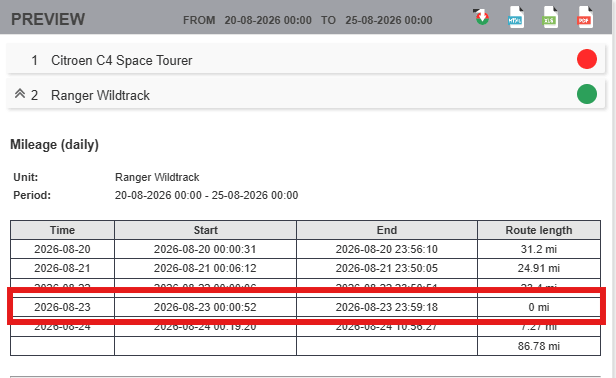
The daily mileage report shows when a vehicle recorded no mileage. Here, there was no recorded use on 23 August. Reviewing this over a longer period can show whether it was an isolated day or part of a wider pattern.
A longer reporting period will usually provide a more representative picture than a single day or week. Managers can then investigate substantial differences between vehicles performing similar roles.
Mileage can be considered alongside:
- The vehicle’s role
- Its normal working area
- The number of journeys completed
- The days on which it was used
- Maintenance requirements
- Seasonal changes in demand
This helps distinguish between a temporary drop in activity and a vehicle that consistently sees less use than expected.
Mileage, journeys and driving time
Two vehicles covering similar mileage may still be used in very different ways.
One might complete frequent local journeys between customer sites. Another may accumulate the same distance through a small number of longer trips. The overall mileage is similar, but the effect on scheduling, working time and vehicle wear may be different.
Fleetloc8’s trip history provides more detail about how that mileage accumulated, including:
- Individual journey distances
- Start and finish times
- Driving duration
- Stops
- Locations visited
- Previous routes
See journeys in context
Here, the journey is displayed going through a geofenced area (in red). This helps show how vehicle activity relates to defined locations such as depots, customer sites or working areas.
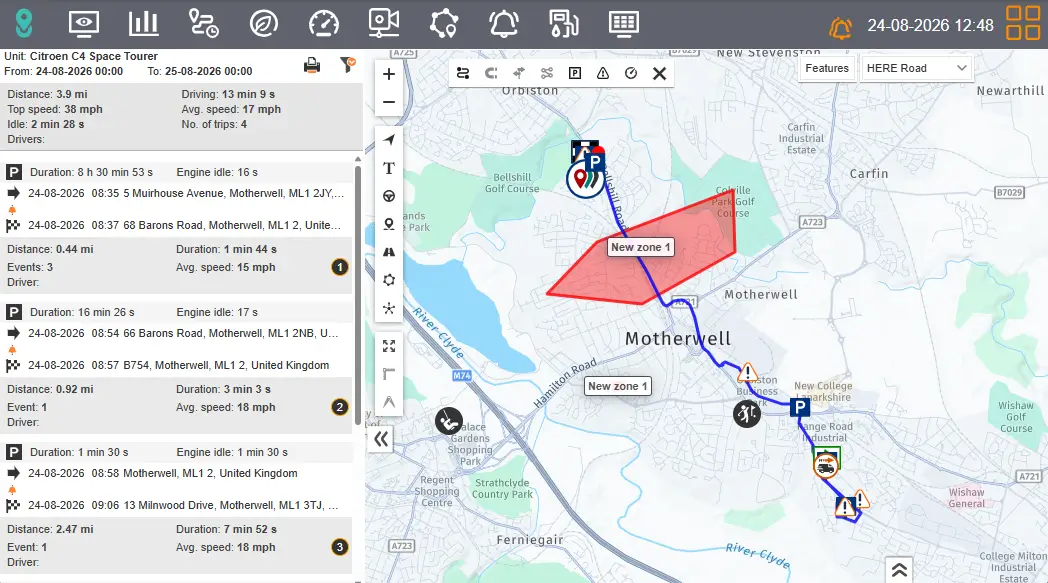
Over time, these records can reveal whether a vehicle is used regularly throughout the working week or only occasionally. They can also highlight repeated journeys and vehicles travelling further than expected.
The findings may support changes to job allocation, but they can also confirm that the current arrangement makes sense. A longer journey may be necessary because a particular driver has the right skills or the vehicle carries equipment needed for the job.
How to improve fleet utilisation
Once a pattern has been identified, there are several ways to improve how vehicles are used.
Review how work is allocated
If one vehicle consistently carries more of the workload, suitable jobs may be available to redistribute. This can help balance mileage and maintenance requirements across similar vehicles.
Use live locations when assigning new jobs
Live vehicle tracking can help managers identify which suitable driver is best placed to respond to a new job. Distance is not the only consideration, but it can prevent work from being assigned based solely on habit or an assumed location.
Examine recurring journeys
Historic tracking can reveal vehicles repeatedly covering the same areas or travelling between the same locations. Some journeys will be necessary, while others could potentially be combined or allocated differently.
Review where vehicles are based
A vehicle may appear underused because it is located away from the areas where demand is strongest. Reviewing journey and location patterns can help determine whether vehicles are positioned appropriately.
Check capacity before adding another vehicle
The Energy Saving Trust recommends reviewing vehicle utilisation when assessing whether the number of vehicles operated exceeds business requirements.
Historic activity can help establish whether existing vehicles are genuinely at capacity or whether some capacity could be used differently.
Measure the effect of any changes
After reallocating work or changing operating areas, businesses can review the same reports again. Comparing mileage and journey activity before and after the change helps establish whether utilisation has improved or the pressure has simply moved to another vehicle.
When should you review fleet utilisation?
Fleet utilisation data becomes particularly useful when a business is:
- Adding or replacing a vehicle
- Approaching the end of a lease
- Taking on or losing a contract
- Redistributing work between locations
- Reviewing maintenance costs
- Changing driver territories or responsibilities
These decisions are often based on how busy the business feels. Vehicle data provides a clearer view of how that activity is distributed in practice.
Making better informed vehicle decisions
Improving fleet utilisation doesn’t necessarily mean operating fewer vehicles. The figures may confirm that specialist or backup capacity is still required.
The objective is to understand the role each vehicle plays and whether current workloads make appropriate use of the vehicles available.
Fleetloc8 brings mileage, historic journeys, trips, stops and live locations together within one telematics platform. This gives businesses practical evidence to support decisions about vehicle allocation, maintenance, renewal and future capacity.
To find out more or to book a demo, get in touch with our team.
